
Article Plan: Incident of the Dog in the Nighttime PDF
Exploring the concept of “incident”, this article delves into its varied meanings – from everyday occurrences to critical events, utilizing diverse definitions and real-world examples․
The term “incident”, seemingly straightforward, possesses a remarkable breadth of meaning․ It signifies something that happens, often carrying a negative connotation, as evidenced by phrases like “dramatic shooting incident․” However, it can also denote a peaceful event – “the voting went ahead without incident․”
This inherent ambiguity necessitates a deeper understanding․ An incident isn’t merely an event; it’s often characterized by unexpectedness or significance․ It’s a core concept in fields like law enforcement, aviation, and safety, demanding precise definition and documentation․
This exploration will unpack the multifaceted nature of “incident,” drawing from dictionary definitions (Collins COBUILD, Oxford Advanced Learners) and examining its usage in various contexts, preparing for a detailed analysis․

Defining “Incident” ⎯ A Broad Perspective
Establishing a comprehensive definition of “incident” requires acknowledging its diverse applications․ At its core, an incident is “a particular occurrence,” potentially minor, yet capable of escalating․ It’s an “event in a narrative,” or simply something that occurs casually․ However, this broadness necessitates nuance․
The term encompasses events ranging from trivial occurrences to significant happenings, often marked by an element of surprise․ Consider a “minor border incident” igniting conflict, or a “workplace incident” leading to legal repercussions․ These examples highlight the potential for disproportionate consequences․
Understanding “incident” demands recognizing its contextual dependence and the potential for unexpected ramifications, setting the stage for detailed examination․
General Definition of Incident
A foundational understanding begins with a general definition: an incident is fundamentally “something that happens,” often carrying an unpleasant connotation․ It signifies an event, occurrence, or happening – a point in time where something takes place․ The Collins COBUILD dictionary defines it as a particular event, especially one that’s unwelcome․
This definition is intentionally broad, encompassing everything from minor mishaps to significant occurrences․ It’s a neutral term, lacking inherent judgment about severity․ However, context is crucial; an incident can be a “dramatic shooting” or simply “voting going ahead without incident․”

Essentially, an incident represents a disruption to the norm, a deviation from expected proceedings․
Incident in Everyday Language
In common parlance, “incident” frequently describes a specific event, often one that is noteworthy or slightly problematic․ We might refer to “an incident at the office,” implying an unpleasant or disruptive occurrence․ It’s a versatile word used to characterize happenings ranging from minor annoyances to more serious situations․
The term often implies a degree of unexpectedness․ While planned events are rarely called incidents, unforeseen occurrences almost always are․ It’s a way to label something that happened, requiring attention or perhaps explanation․
Everyday usage leans towards describing isolated events, rather than ongoing processes or trends․
Incident in Specialized Fields (Law Enforcement, Aviation, Safety)
Within professional contexts like law enforcement, aviation, and safety protocols, “incident” takes on a more formalized and critical meaning․ It signifies a specific event with potential consequences, demanding detailed reporting and analysis․ A “shooting incident” denotes a serious crime, while an “aviation incident” could range from a minor mechanical issue to a near-miss․
These fields prioritize meticulous documentation through “incident reports,” outlining details for investigation and preventative measures․ Safety protocols heavily rely on incident reporting to identify hazards and improve procedures․
The term’s precision is crucial; it’s not merely a happening, but a potentially impactful event requiring structured response․
The Significance of Unexpectedness in Incidents
A core characteristic of many incidents is their unexpected nature․ While not all incidents are entirely unforeseen, a significant element of surprise often accompanies them․ This unexpectedness amplifies their impact, demanding immediate attention and potentially disrupting established routines․
The term itself frequently implies something that happens, often without prior warning․ A “minor border incident” escalating into conflict highlights how unanticipated events can have major repercussions․ Even seemingly small occurrences can become significant due to their unpredictable timing or consequences․
This element of surprise underscores the need for preparedness and robust response systems․
Incident Reporting and Documentation
Thorough incident reporting and documentation are crucial for understanding, analyzing, and preventing future occurrences․ These reports serve as official records of events, detailing what happened, when, where, and who was involved․ Accurate documentation facilitates investigations and helps identify patterns or systemic issues contributing to incidents․
The Portland 911 Dispatch Incidents dataset exemplifies this need, providing a record of calls for service․ Effective reports aren’t merely descriptive; they aim to capture the context surrounding the incident, aiding in informed decision-making and resource allocation․
Clear, concise documentation is paramount for accountability and continuous improvement․
The Purpose of Incident Reports
Incident reports serve multiple vital purposes, extending beyond simply recording events․ Primarily, they establish a factual account for investigation and analysis, identifying root causes and contributing factors․ This allows for the implementation of corrective actions to prevent recurrence․
Furthermore, reports demonstrate due diligence, protecting organizations from potential legal liabilities․ Detailed documentation, like that found in the Portland 911 dataset, supports transparency and accountability․ They also facilitate trend analysis, revealing patterns and informing resource allocation․
Ultimately, incident reports are proactive tools for enhancing safety and operational efficiency․
Key Elements of a Comprehensive Incident Report
A robust incident report demands precision and detail․ Essential components include a clear date, time, and location of the event, alongside a concise description of what transpired – mirroring the factual nature of Portland 911 dispatch records․ Identifying involved parties, witnesses, and any injuries is crucial․
Furthermore, reports should document immediate actions taken, environmental conditions, and any contributing factors․ Accurate reporting necessitates objective language, avoiding assumptions or opinions․ A thorough report also includes a risk assessment and recommendations for preventative measures, ensuring future safety․
Analyzing Incident Data: Portland 911 Dispatch Incidents as a Case Study
Portland’s 911 dispatch incident dataset offers a valuable lens for understanding incident patterns․ This geoRSS dataset, provided by civicapps․org and the Portland Police Bureau’s IT Division, catalogs closed, non-confidential calls for service․ Analyzing this data reveals the types of incidents reported – ranging from minor disturbances to serious crimes – and their geographical distribution․
Examining trends within the dataset allows for resource allocation optimization and proactive policing strategies․ Understanding the context surrounding each incident, as highlighted by definitions from Collins COBUILD and Oxford dictionaries, is paramount for accurate interpretation and effective response․
Overview of the Portland 911 Incident Dataset
The Portland 911 Dispatch Incidents dataset provides a comprehensive record of calls received by the city’s emergency response system․ This publicly available resource, maintained by the Portland Police Bureau’s Information Technology Division and accessible through civicapps․org, details closed, non-confidential incidents․ The dataset utilizes a geoRSS format, enabling spatial analysis of reported events․
It’s a dynamic collection, constantly updated with new incident reports․ This allows researchers and city planners to monitor trends, identify hotspots, and assess the effectiveness of public safety initiatives․ Understanding the scope and structure of this dataset is crucial for meaningful analysis․
Types of Incidents Recorded in the Dataset
The Portland 911 dataset encompasses a remarkably broad spectrum of incidents, reflecting the diverse needs of the community․ Reports range from minor disturbances and noise complaints to serious crimes, traffic collisions, and medical emergencies․ Specific categories include assaults, burglaries, vehicle accidents, and requests for assistance from various city services․
The dataset’s granularity allows for detailed categorization, enabling analysis of incident types by location, time of day, and other relevant factors․ This detailed breakdown is vital for understanding patterns and allocating resources effectively․ The sheer variety underscores the complexity of urban life and the demands placed on emergency responders․
The Role of Context in Interpreting Incidents
Understanding an incident’s true nature necessitates careful consideration of its surrounding context․ A seemingly minor border incident, for example, can escalate into a full-blown conflict depending on geopolitical tensions and historical grievances․ Similarly, a workplace incident, initially appearing accidental, might reveal systemic safety failures upon closer inspection․

Contextual factors include the location, time, individuals involved, and preceding events․ Ignoring these nuances can lead to misinterpretations and inappropriate responses․ A thorough investigation must uncover the ‘who, what, when, where, and why’ to accurately assess the incident’s significance and prevent recurrence․
Minor Incidents with Major Consequences
Often, seemingly insignificant events can trigger disproportionately large repercussions․ A minor border incident, as highlighted, can erupt into war, demonstrating how quickly escalation can occur․ Even a small oversight in aviation safety protocols, initially appearing as a minor incident, can lead to catastrophic accidents․

Similarly, an unpleasant incident at the office, like a misinterpreted email, might escalate into legal action if it constitutes harassment or discrimination․ These examples underscore the importance of proactive risk assessment and diligent incident reporting, even for events perceived as trivial․ Ignoring small issues can create vulnerabilities for larger, more damaging consequences․
Border Incidents Escalating into Conflict
Historically, border regions have been flashpoints for international disputes, where minor incidents can rapidly escalate into full-blown conflicts․ A seemingly small transgression – an accidental crossing, a disputed patrol route, or even a misunderstanding – can be misinterpreted as an act of aggression․
The provided text notes a “minor border incident that erupted into a war,” illustrating this dangerous dynamic․ Such incidents often involve heightened tensions, nationalistic fervor, and a lack of clear communication channels․ These situations demand careful diplomacy, robust de-escalation strategies, and a commitment to peaceful resolution to prevent widespread conflict and humanitarian crises․
Workplace Incidents Leading to Legal Action
Workplace incidents, ranging from minor injuries to serious accidents or harassment, frequently trigger legal repercussions for employers․ Failure to maintain a safe working environment, or to adequately address employee complaints, can result in lawsuits, fines, and reputational damage․
These legal actions often stem from negligence claims, violations of safety regulations, or discrimination/harassment allegations․ Thorough incident reporting and investigation are crucial for mitigating legal risks․ Documentation serves as evidence of due diligence and a commitment to employee well-being, potentially lessening the severity of legal consequences․ Proactive prevention is paramount․
The Evolution of the Term “Incident” Over Time
Historically, “incident” denoted an incidental occurrence, a minor event accompanying a larger narrative – a detail rather than a central happening․ Over centuries, its meaning broadened․ The rise of formalized reporting in fields like law enforcement, aviation, and safety protocols significantly shaped its modern usage․
The term shifted from describing trivial events to encompassing a wider spectrum, including unexpected occurrences with potential consequences․ Today, “incident” often implies a need for investigation and preventative measures․ This evolution reflects a growing emphasis on risk management and accountability, moving beyond simple observation to proactive response․
Synonyms and Related Terms to “Incident”
Numerous terms share semantic space with “incident,” offering nuanced variations in meaning․ “Occurrence” is a close synonym, emphasizing simply that something happened․ “Event” is broader, lacking the often-implied negativity of “incident․” “Happening” suggests spontaneity, while “episode” implies a distinct part of a larger story․
In specialized contexts, “case” (legal), “accident” (unintentional harm), and “breach” (security) become relevant․ Related phrases include “incident report,” highlighting documentation, and “near miss,” denoting a prevented incident․ Understanding these alternatives clarifies the specific nature of the event being described, enriching communication and analysis․
Incident Pronunciation and Usage Tips

Pronouncing “incident” correctly is straightforward: /ˈɪnsɪdənt/․ Stress falls on the second syllable․ When using the word, remember its common association with something unplanned or undesirable, though not necessarily catastrophic․ Avoid using it for purely positive events․
Context is key․ While suitable for everyday conversation (“a minor incident at the store”), formal settings often demand precision․ In legal or technical reports, specify the type of incident (e․g․, security incident, aviation incident)․ Be mindful of synonyms like “occurrence” if “incident” carries unwanted negative connotations․ Clarity ensures effective communication․
Incident in Narrative and Dramatic Contexts
Within storytelling, an “incident” functions as a pivotal event driving the plot forward․ It’s not merely a happening, but a moment of disruption, revealing character or escalating conflict․ Think of a crucial scene in a novel or play – a dramatic confrontation, a surprising discovery, or a seemingly minor event with major repercussions․
These narrative incidents often possess an element of unexpectedness, mirroring real-life occurrences․ Authors skillfully employ incidents to build suspense, create emotional resonance, and explore thematic concerns․ A well-crafted incident can transform a static narrative into a dynamic and engaging experience for the audience․

Collins COBUILD Dictionary Definition of Incident
According to the Collins COBUILD Advanced Learners Dictionary, an incident is defined as “something that happens, often something that is unpleasant․” The dictionary highlights its usage in describing disputes, like “incidents between two nations,” or serious events, such as a “shooting incident” resulting in casualties․
Notably, it also illustrates a positive connotation, stating events can proceed “without incident,” signifying a smooth, uneventful course․ This demonstrates the term’s versatility․ Copyrighted by HarperCollins Publishers, the definition emphasizes the occurrence aspect, acknowledging both minor and significant happenings as incidents․
Oxford Advanced Learners Dictionary Definition of Incident
The Oxford Advanced Learners Dictionary defines an incident as “an event or occurrence, especially one that is unexpected․” This definition underscores the element of surprise often associated with incidents, highlighting their potential to disrupt normalcy․ It further clarifies that incidents can range from minor events – “an unpleasant incident at the office” – to those with broader implications․
The dictionary provides comprehensive details, including pronunciation guidance, example sentences, and grammatical notes․ It also lists related terms, enriching understanding․ This resource emphasizes the contextual nature of “incident,” acknowledging its application in governmental and everyday scenarios․

Incident vs․ Occurrence: Distinguishing the Terms
While often used interchangeably, “incident” and “occurrence” possess subtle distinctions․ An “occurrence” broadly signifies something that happens, a simple event without necessarily implying negativity or consequence․ Conversely, “incident” frequently suggests an unplanned event, often undesirable, requiring attention or investigation․
The nuance lies in the implication of disruption․ An incident typically disrupts a normal process or state, potentially leading to harm or requiring corrective action․ Think of a minor traffic stop as an occurrence, but a resulting accident as an incident․ Both terms denote events, but “incident” carries a weight of unexpectedness and potential impact․
The Importance of Incident Investigation
Thorough incident investigation is crucial for understanding root causes and preventing recurrence․ It moves beyond simply documenting what happened to analyzing why it occurred, identifying systemic flaws or contributing factors․ Effective investigations aren’t about assigning blame, but about learning and improving processes․
Detailed reports, gathered evidence, and witness statements form the foundation of a robust investigation․ Analyzing data from sources like the Portland 911 dispatch records can reveal patterns and trends, highlighting areas needing attention․ Proactive investigation minimizes future risks, safeguarding individuals and organizations from similar events․
Incident Prevention Strategies
Proactive incident prevention relies on a multi-faceted approach, encompassing risk assessment, training, and robust safety protocols․ Analyzing past incidents – like those documented in Portland’s 911 dispatch data – reveals recurring themes and vulnerabilities․ Implementing preventative measures, such as improved communication systems or enhanced security procedures, directly addresses identified risks․
Regular drills and simulations prepare individuals to respond effectively during emergencies․ Fostering a culture of safety, where reporting near misses is encouraged, allows for early intervention․ Continuous monitoring and evaluation of prevention strategies ensure their ongoing effectiveness, minimizing the likelihood of future incidents and promoting a safer environment․
The term “incident” proves remarkably versatile, spanning minor occurrences to significant events with far-reaching consequences․ Its meaning shifts depending on context – from casual conversation to legal documentation, as highlighted by definitions from Collins COBUILD and Oxford dictionaries․
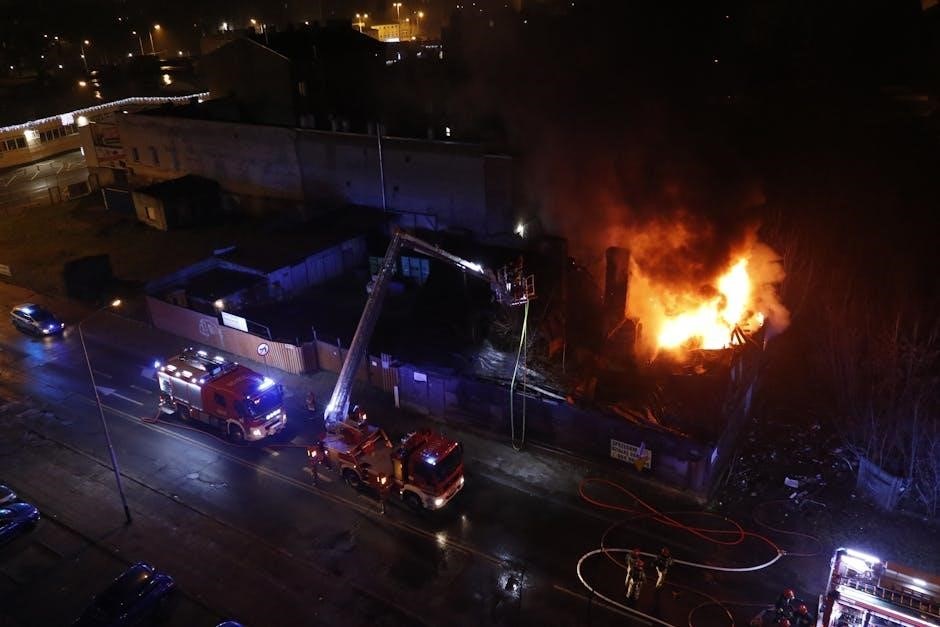
Understanding this nuance is crucial, particularly when analyzing incident data, like Portland’s 911 calls, where seemingly small events can escalate․ Recognizing the element of unexpectedness inherent in many incidents underscores the importance of proactive prevention and thorough investigation․ Ultimately, “incident” represents a complex concept demanding careful consideration and precise interpretation․